RIM and iRIM: turning angular samples
into spatial resolution
RIM rearranges the pixels of a lens array image one to one, without interpolation, into views; iRIM runs it backwards and synthesizes the elemental image of a virtual lens array from multi-view images. In the lab on the research page, step 2, “Rearrange”, is RIM.
At a glance
The ICCAS 2026 paper's Blender scene, rendered with the paper's script from 8 × 8 camera positions, changing only the number of views and the resolution.

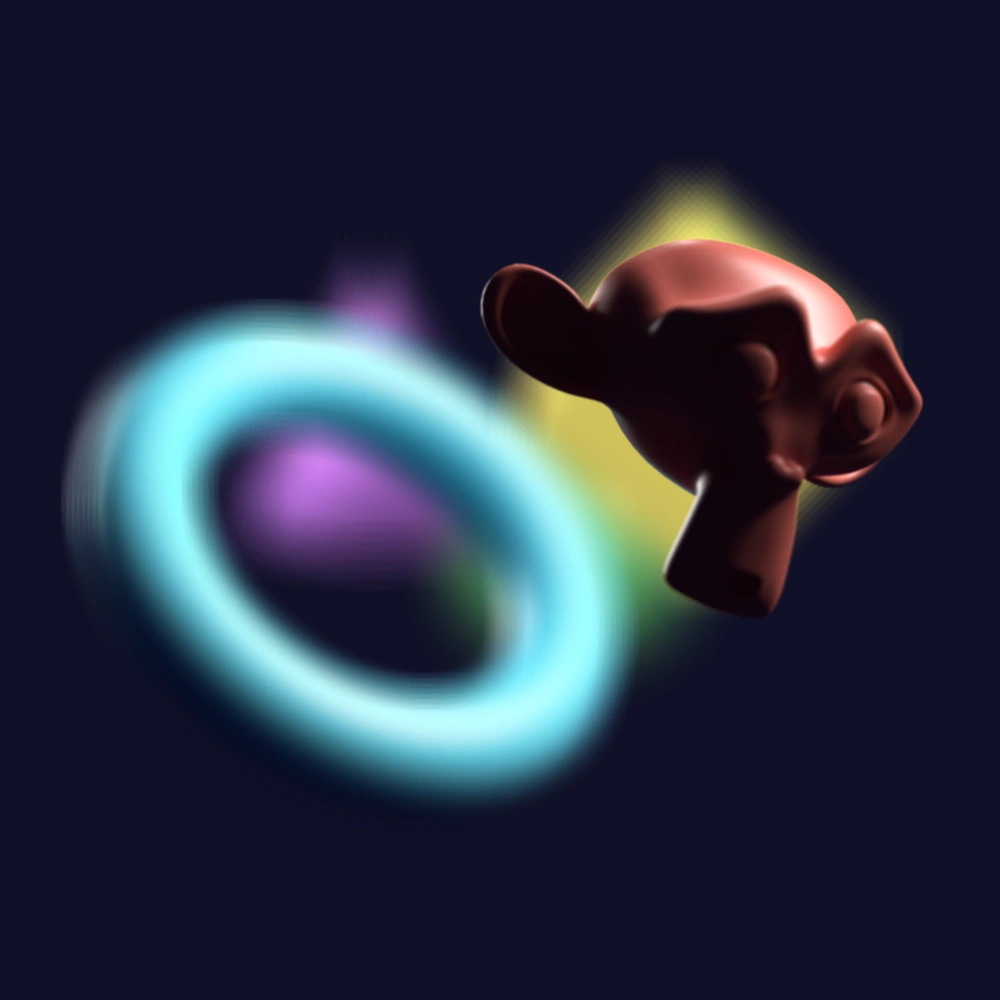
Each view is rendered at 1920 × 1080, and the 1000 × 1000 area around the objects is used without downscaling (500 × 500 on phones; the paper uses 6 × 6 views). Reconstruction shifts the 64 views by distance and averages them, precomputed in 31 steps from 0.36 to 1.55 m. Both figures move by themselves until you touch them, and stay where you leave them once you use the mouse or the slider.
Problem
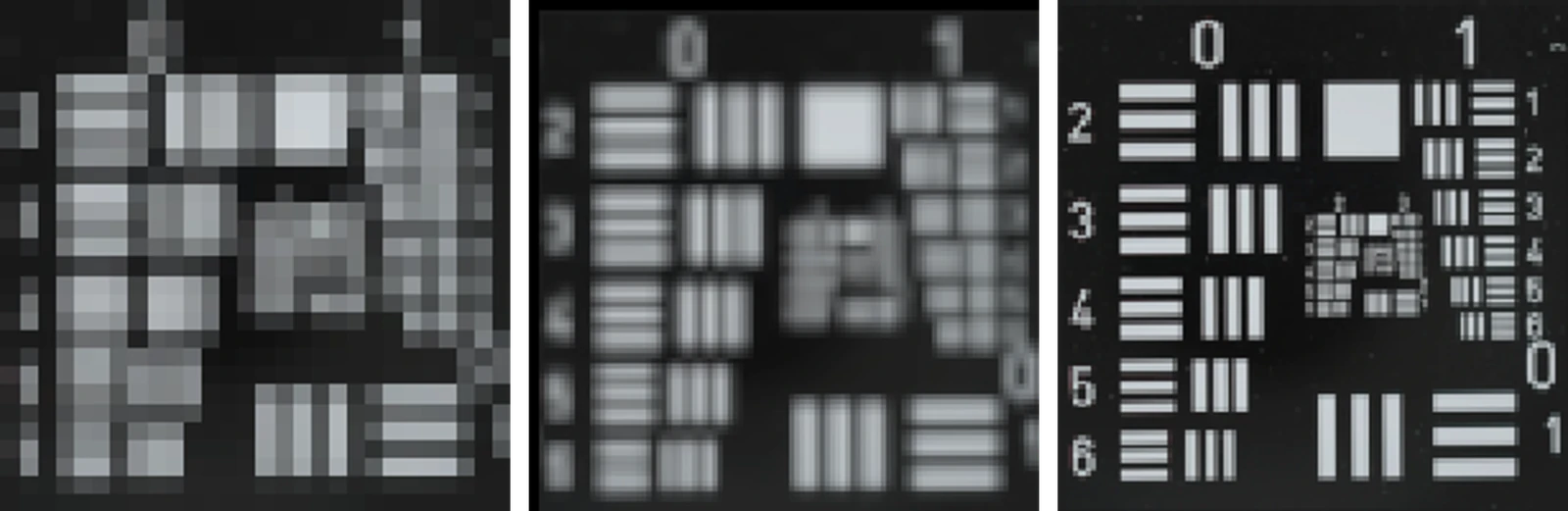
A lens array camera divides its sensor pixels between the number of lenses and the pixels under each lens. More lenses give richer depth information, but each lens then forms an elemental image only a few pixels wide. As it is, the image is too coarse both for people to look at and for a detector to work on.
In a lens array, each lens with the patch of sensor behind it works like a tiny camera. The light from one point passes through several lenses and lands at a different spot (pixel) under each. The lens index is where the light passed through, and the pixel position under the lens is the direction it came from. So one elemental image holds both position and direction.
What a lens array records
RIM: ray-based inverse mapping
Think of each pixel of the elemental image as re-emitted through a virtual lens array and captured again by a virtual camera. Under telecentric capture and orthographic recapture, this turns into a one-to-one swap of (lens index, position under the lens) into (position under the lens, lens index). There is no interpolation, so the quantization error is zero, and it produces as many views as there are pixels under a lens, each with as many pixels as there are lenses. The paper uses the result as the first stage of computational integral imaging reconstruction (CIIR).
Results
Seven Stanford Lytro light field scenes, as reported in the paper.
| Pipeline | PSNR (dB) | SSIM | mAP50 |
|---|---|---|---|
| Elemental image → CIIR | 23.31 | 0.741 | 0.665 |
| RIM → CIIR (ours) | 25.70 | 0.877 | 0.776 |
iRIM: a virtual lens array from multi-view images
Because RIM is one to one, it also runs backwards. iRIM takes multi-view images and synthesizes the elemental image of the virtual lens array you want. The paper covers a 6 × 6 configuration matched to a 24-inch FHD panel (1.6056 mm lenses, 320 × 180 of them).
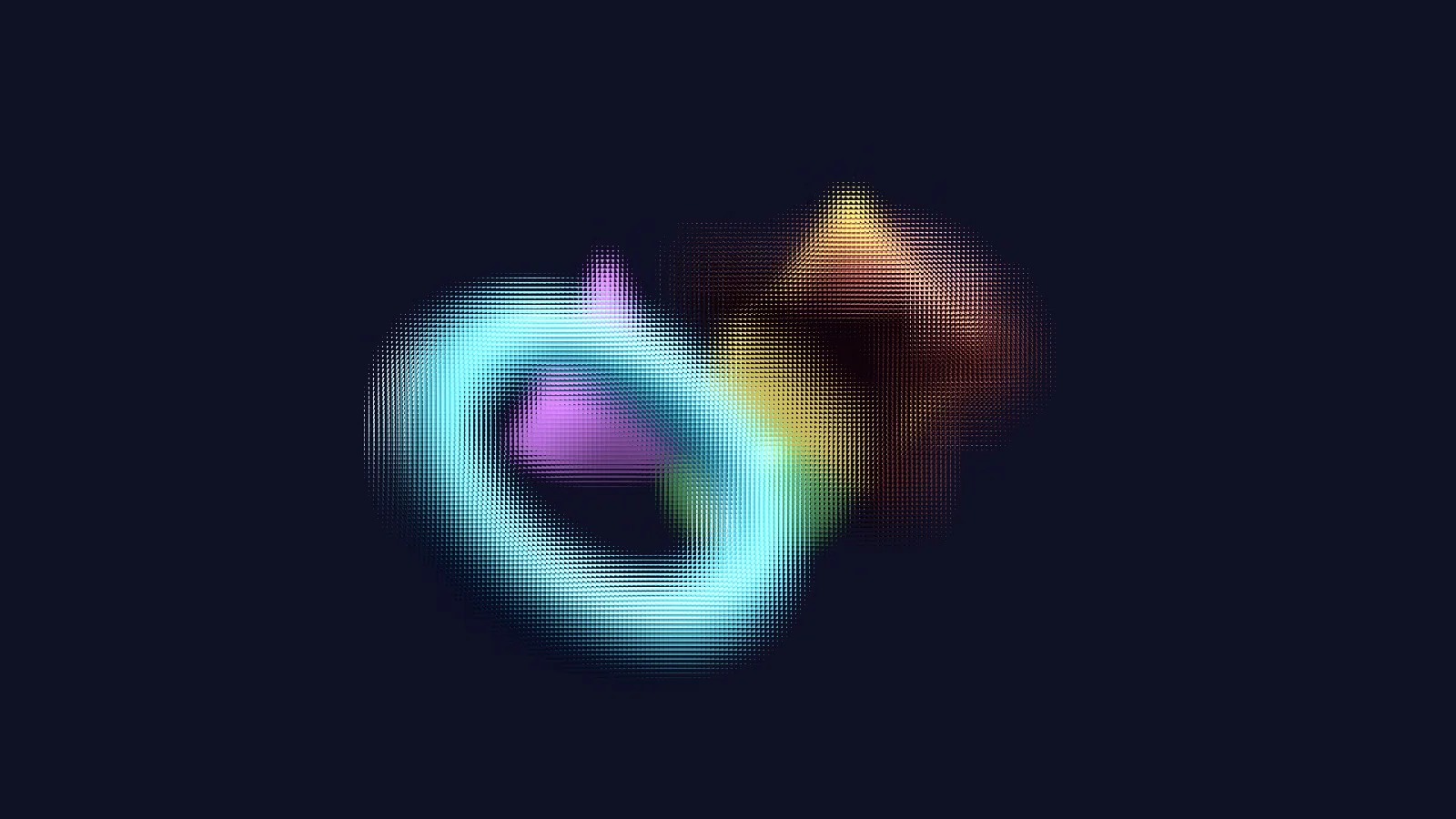
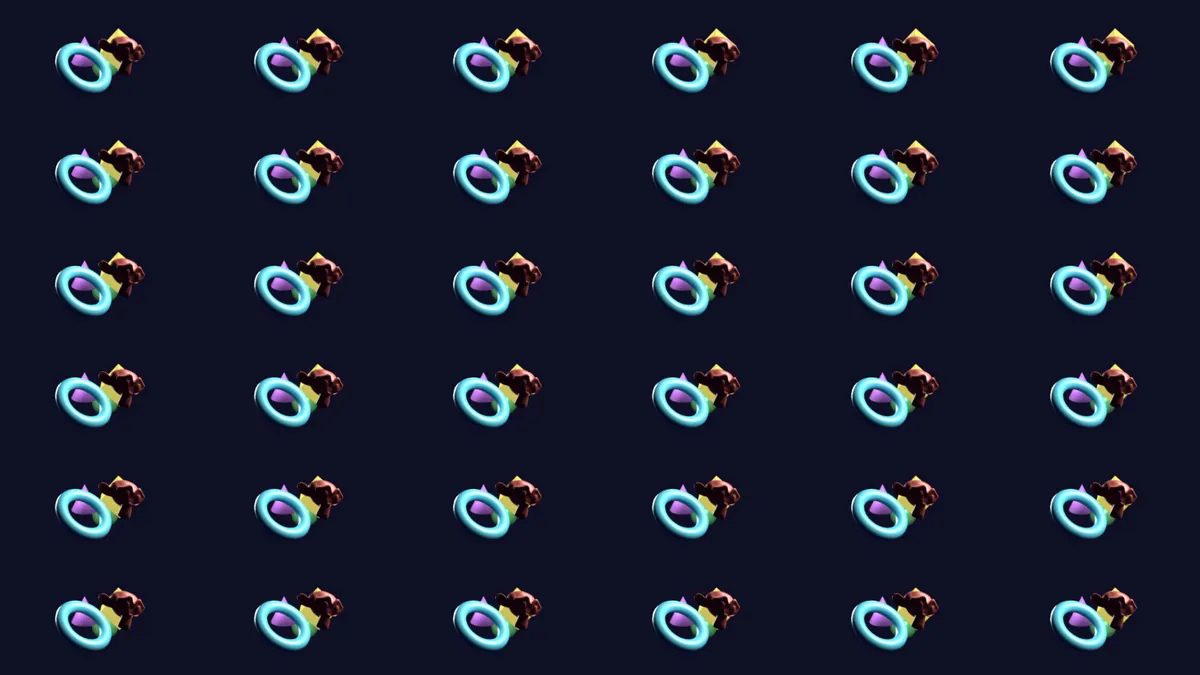
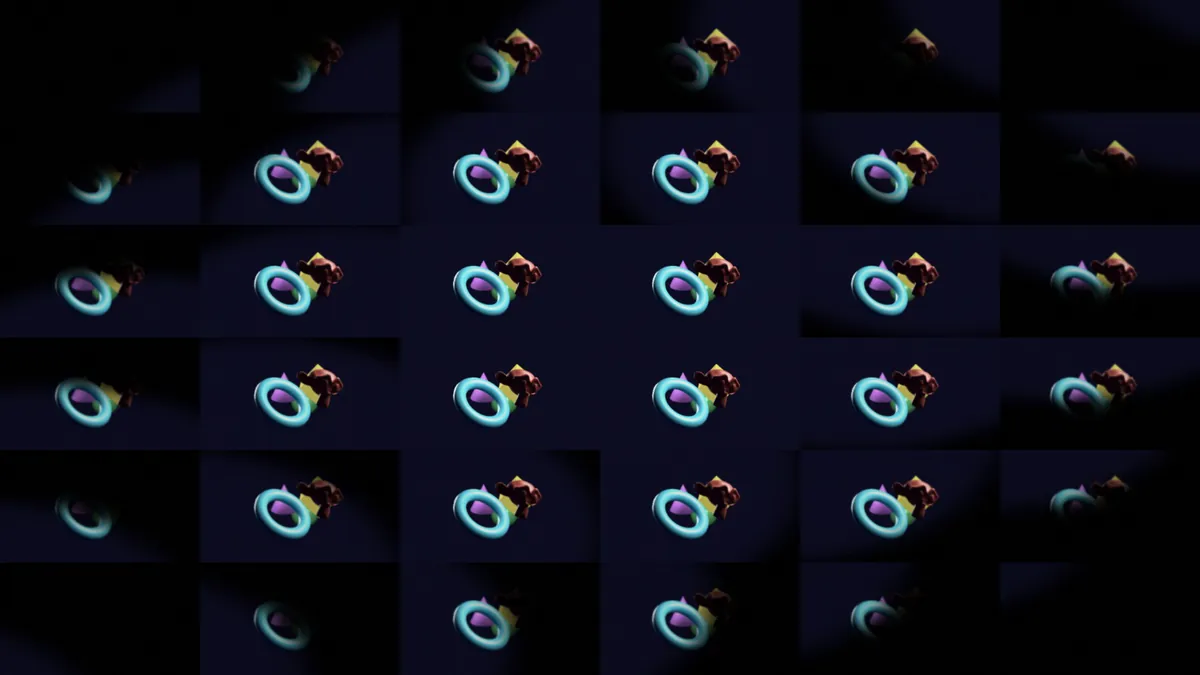
View grids made from the same Blender scene. ICCAS 2026
How the lab on the research page is built
The lab computes lens array capture, RIM rearrangement and reconstruction in the browser and shows them as they happen. At the end the reconstruction plane is shown large and head on, and clicking an object moves the focus to its depth. Open the lab →
- 3D scene: the monkey head and the torus exported from the ICCAS 2026 paper's Blender scene stand as real 3D models, and the lens array capture is computed in the browser. In this lab's pinhole model, the pixel at the same spot under every lens looks in the same direction, so one view is an oblique parallel projection of the scene. The 8 × 8 views are drawn that way, with their depth, and rearrangement and reconstruction are computed from that data. The monkey head in front stands so that it hides part of the torus. The spatial resolution is 64 × 64 lenses. In the result, clicking an object moves the focus to the depth (median) of the four central views around the click.
- Capture: a pinhole array model. Each elemental-image pixel starts at the 3D position of the point it recorded and travels through its lens to the sensor. The camera models in step 1 picture the idea that a lens with the sensor patch behind it is a tiny camera; they are drawn larger than a real lens so they can be seen.
- Rearrangement and reconstruction: RIM, which swaps (lens index, position under the lens), and reconstruction, which shifts the views by distance and averages them, follow the papers. When the distance matches an object's depth, its samples land back where they came from and it becomes sharp. When step 2 shows one view large, each view is moved as a whole, by whole lenses, so that the views line up on a plane behind the scene. A lens array's own views line up on the array itself, where far objects shift the most; lined up behind the scene, the background holds still and the nearer an object, the more it shifts, as when your eyes stay on the moon. Values are moved, not changed.
- Lytro sample: the occlusions_26 scene from the Stanford Lytro Light Field Archive (A. S. Raj, M. Lowney, R. Shah, G. Wetzstein, 2016). The archive's lenslet image is not the raw sensor image: Lytro's software has demosaiced, aligned, resampled and distortion-corrected it, giving 14 × 14 pixels under each of 541 × 376 lenses. 128 × 128 lenses where a branch hides part of a stop sign are cut out without resampling, and the central 8 × 8 pixels (= 8 × 8 views) are used. Rearrangement moves pixels without altering their values, and reconstruction is computed by shifting and averaging the 64 views. “Estimated depth layers” shows how well a plane sweep over the same 64 views agrees at each depth; it is not measured 3D, and the depth axis is disparity (px/view), not meters. The archive states no license, so the data is credited and only a crop is used, for a non-commercial demonstration.
- Sound: the music, sound effects and robot voice are all synthesized by the browser.
The code for both papers is kept in a private repository (13 tests).