Reconstructing lens array images in 3D with geometric optics, without training
Capture with a lens array, rearrange, reconstruct
Your browser captures a 3D scene through a lens array and computes it with the paper's method (RIM). Click the screen to start, with sound.
Estimated · layers showing how well the 64 views agree at each depth (plane). Not measured 3D; the depth axis is disparity (px/view), not meters. Faint, spread-out areas are where the views do not settle on one depth.
Lytro data: Stanford Lytro Light Field Archive, occlusions_26 (Raj et al., 2016) · cropped for non-commercial demonstration
FigureThe paper's method, RIM, ICMV 2026 Best Poster Award · How it was built →
This device cannot run the lab animation, so a research image is shown instead.
In step 3 you can move the reconstruction distance yourself
From input to result metrics
The three lines of papers, drawn side by side in the same stages. Click a node to see the method and results at that stage.
-
- Data
- Evaluated on 7 Stanford Lytro light field scenes. The elemental image each lens forms is only a few pixels wide.
-
- Method
- A one-to-one rearrangement that swaps (lens index, pixel position under the lens) (Ray-based Inverse Mapping). Under telecentric capture and orthographic recapture there is no interpolation, so the quantization error is zero.
- Presented
- ICMV 2026, Budapest · Best Poster Award
- More
- RIM and iRIM page
-
- Method
- The rearranged views are used as the first stage of computational integral imaging reconstruction (CIIR) and compared with using the elemental images as they are.
-
- Result
- On the 7 Lytro scenes: PSNR 23.31 → 25.70 dB, SSIM 0.741 → 0.877, and pretrained YOLO detection mAP50 0.665 → 0.776.
-
- Data
- 9×9 elemental images, the camera parameters and the depth to reconstruct.
-
- Method
- The search that reconstructed again and again to find the origin with the least quantization error became a calculation from the camera parameters alone. In the paper's experiments it gave the same origin and SSIM as the iterative search.
- Presented
- ITC-CSCC 2025 (Seoul, poster) · ITC-CSCC 2026 (Bangkok, oral)
-
- Result
- For 9×9 elemental images, the reconstructions needed to choose the origin dropped from 81 to 1.
- Stack
- Python
- NumPy
- CuPy
-
- Result
- CPU 0.31 s (measured in the paper), GPU (CuPy, RTX 3090) 0.0057 s. The 25.45 s of the iterative search is an estimate, 0.3142 s per run × 81.
- Code
- origin-point-optimization-vcr
-
- Data
- Views rendered from several positions.
-
- Method
- Because RIM is one to one, it also runs backwards: iRIM synthesizes the elemental image of the virtual lens array you want from multi-view images.
- Presented
- ICCAS 2026, Sapporo · poster
-
- Result
- A 6×6 configuration matched to a 24-inch FHD panel (320×180 lenses). Every view has 100% effective coverage, against 6.7% for the corner views of a simulated lens array camera.
Four topics
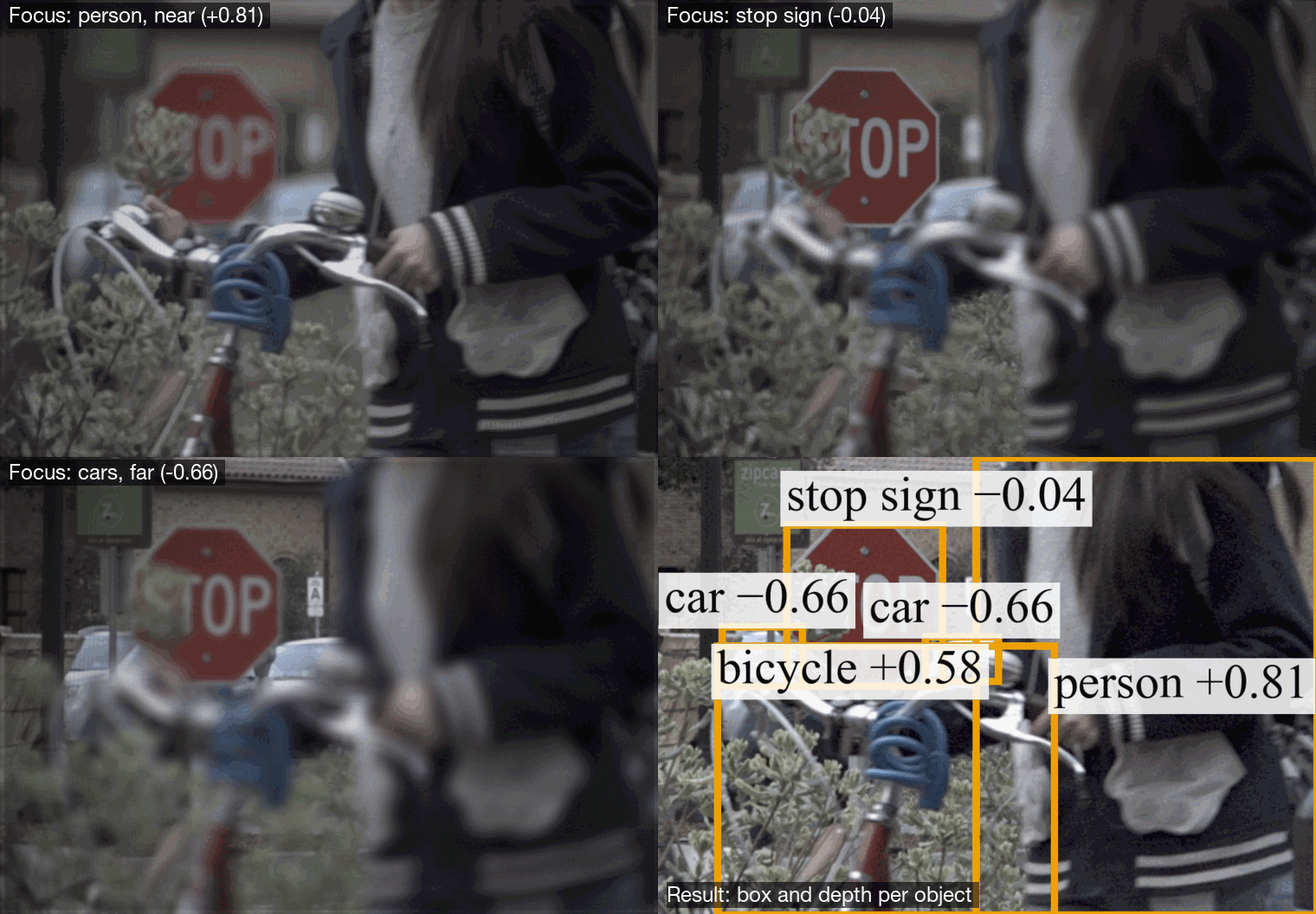
Real-time integral imaging: detect once, refocus only inside each box
From a single real Lytro lens array image, the GPU estimates a box and a depth for each object in real time. Instead of running detection at every depth plane, it detects once and refocuses only inside each box.
Lytro data: Stanford Lytro Light Field Archive, occlusions_25 (Raj et al., 2016)
16.4 ms per real Lytro frame (61 fps, RTX 3090)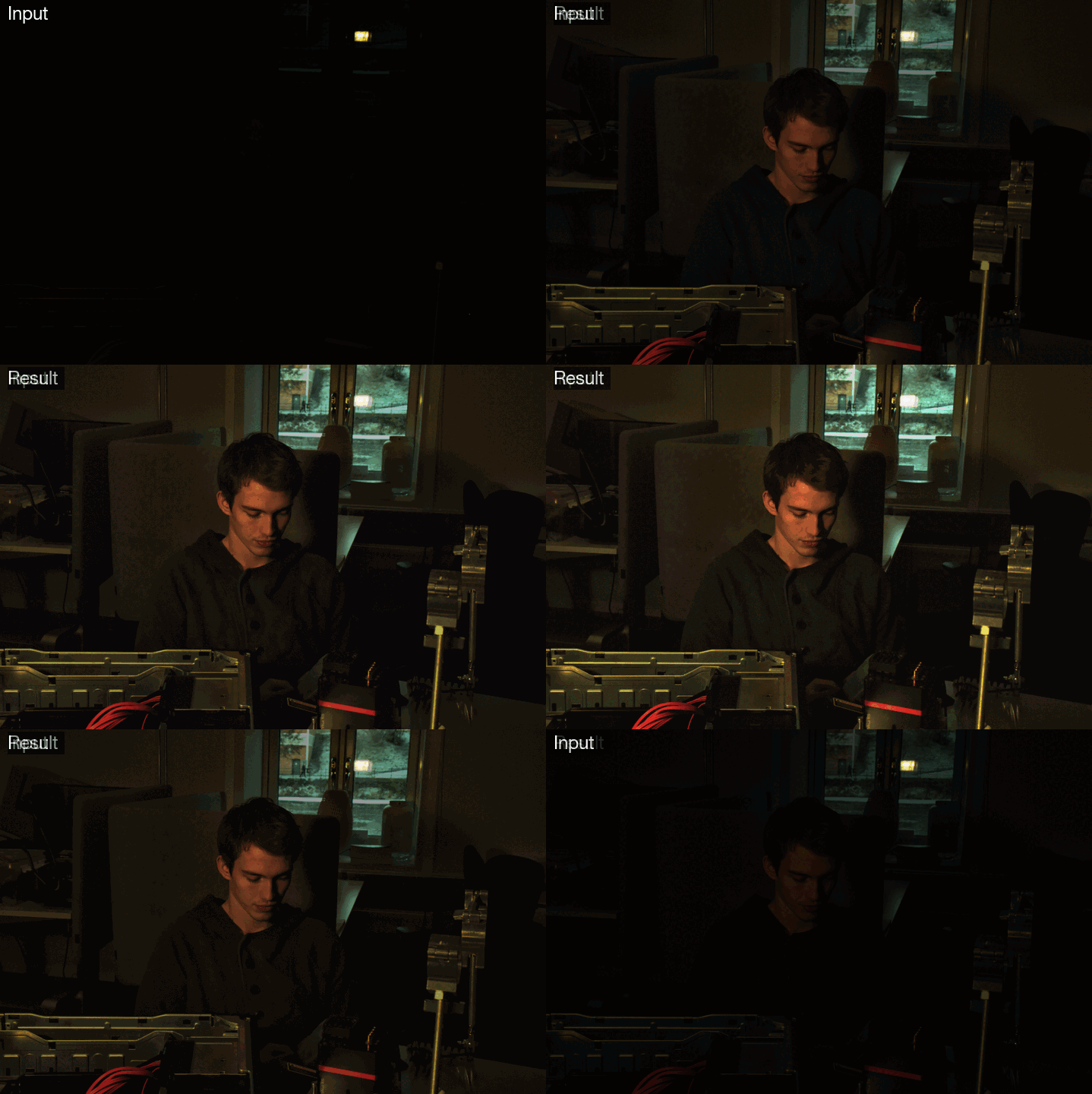
Image enhancement for low-light and hazy scenes
Photos taken in the dark or in haze are processed one at a time and made clear. Above: a dark photo from public data.
Public data: SI-HDR (Hanji et al., SIGGRAPH 2022, CC BY 4.0)
One image at a timeRIM and iRIM: turning angular samples into spatial resolution
RIM rearranges the pixels of a lens array image one to one, without interpolation, into views; iRIM runs it backwards to synthesize the elemental image of a virtual lens array from multi-view images. Step 2 of the lab above is RIM.
PSNR +2.39 dB · SSIM +0.14 on 7 Lytro scenes (as reported in the paper)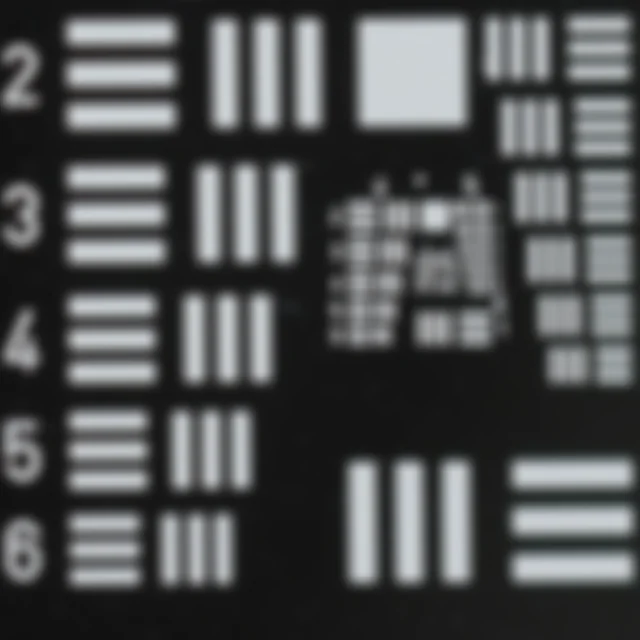
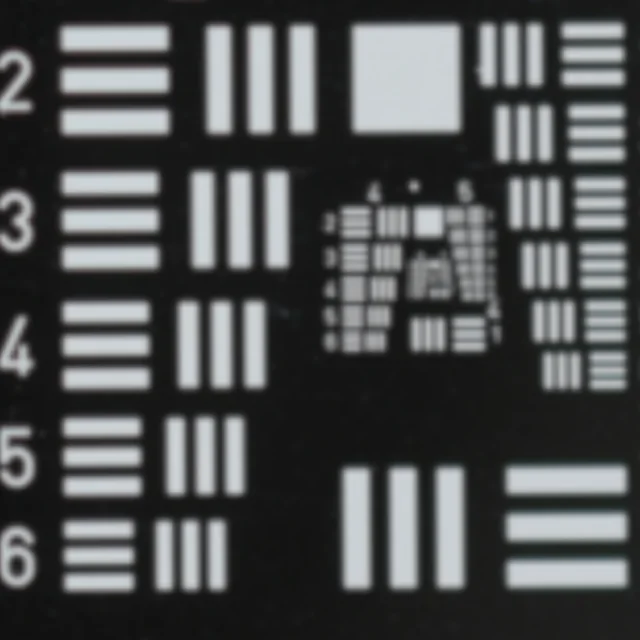
Origin point optimization: sharper, then faster volumetric reconstruction
Optimizing the origin point reduces the quantization error of volumetric computational reconstruction (VCR), and the origin is then computed from the camera parameters without an iterative search.
81 reconstructions → 1 (paper: 0.31 s; the iterative search an estimated 25.45 s)4 first-author international conference papers, and a domestic presentation
- ICMV 202619th · Budapest
Angular-to-Spatial Information Redistribution via Ray-based Inverse Mapping
- ICCAS 2026Sapporo
Virtual Lens Array Synthesis from Multi-View Images via iRIM
- ITC-CSCC 2026Bangkok
Accelerated Origin Point Optimization for Volumetric Computational Reconstruction
- ITC-CSCC 2025Seoul
Image Enhancement of Volumetric Computational Reconstruction Using Origin Point Optimization
- OSK 2024Korea · Photonics Conference
원점 최적화를 이용한 체적 컴퓨터 재생의 이미지 향상 (image enhancement of volumetric computational reconstruction using origin point optimization)
From a course project to master's research
- 2022Starting point in vision and MLDepth estimation with correlation filters and VCR, a course project in MATLAB (code), is where this research started. Alongside it: an MNIST CNN in MATLAB with backpropagation and momentum gradient descent written by hand, no deep-learning framework. My interest in vision began with my graduation project, Smart Mirror (team of two: Raspberry Pi, OpenCV LBPH face recognition, Kakao speech API).
- Aug 2024 – Mar 2025Undergraduate researcher, 3D Image Processing Systems Lab, Hankyong National UniversityAdvised by Prof. Myungjin Cho. A first-author poster at Photonics Conference 2024, the groundwork for the ITC-CSCC 2025 paper
- Apr 2025 – nowMaster's program, Kyushu Institute of TechnologyLight field and integral imaging 3D reconstruction, advised by Prof. Min-Chul LeeFinishing my master's in March 2027
- 2026Rotary Yoneyama Memorial Foundation ScholarSelected through a Japanese-language interview in Rotary District 2700